The blog stats make for interesting reading.
The most popular blog posts tend to be the ones relating to the Barkas van and the Brakas Framo Museum.
After that, the post ' Two stroke cars of the past has always attracted a lot of hits'.
My two articles regarding the 'Horch Museum in Zwickau and the Wartburg Museum in Eisenach have also been hugely popular'.
All the Dkw postings too have had a lot of readership, particularly the Schnellaster Van and the Munga posts.
The blog is currently getting about 400 hits per week and rising all the time.
Biggest readership is tied usually between Germany and the Usa.
The Uk, Ireland, Poland and Hungary also show up strongly. There's also interest from France, Holland and all the countries of Eastern Europe which would have been familiar with two stroke cars.
These blogs truly scan the globe, there's even been hits from Thailand, India, Argentina and Brazil!

All about cars made with a two stroke engine.
Wednesday, October 19, 2011


Friday, September 23, 2011
The Two Stroke Saab Sonett, a rare beast indeed!
I haven't posted here for a few weeks, partly due to a sudden death in my family.
I hope to rectify matters somewhat and post more frequently from now on.
The Saab Sonett/Saab 94: 1955-1957
This was a futuristic and fabulous looking two seater sports car, first made in 1955
and of which only 6 were known to have been built.
It was a veritable flying machine of its time, capable of a top speed of up to 210 kph
(approx 120 mph and 19.2 seconds for standing mile sprint.
It shared it's engine and mechanicals with the Saab 93 and what made it so fast was its
incredibly low overall weight of just 500kg! and a different, more potent carburettor.
This car was over 300 kg lighter than the 93.

The engine was tuned to develop 57.5 hp.
The car had a specially designed, low weight, light metal box chassis, not made
typically of tubular steel but a lighter metal.
The chassis of Sonnet1 was aluminimum, Sonnets 2-6, chassis were made from
light steel.
Fibreglass body panels were then bolted onto this to create a vehicle that was supe
r light.
It utilised a 3 speed gear box, mounted in front of the engine.
Over 5000 km of testing was then undertaken with satisfactory results during
Spring and Summer of 1956, with the sole prototype.
Five more Sonnets would be manufactured during 1957.
It was always intended that the Sonnet would be a competition production car and not
merely a prototype, with the Usa perceived as its main marketplace.
For reasons only known to Saab, they couldn't or didn't want to build the
Sonnet in Sweden. They wanted the 'Jensen' company in Scotland to
build the car. Jensen were the builders of the Volvo P1800 and must have
impressed Saab suitably.
Mr Jenson, However, would not travel to Sweden to visit Saab and there was also
the fact that American's viewed British built cars as being of poor quality.
These factors led Saab Chief Svante Holm to give the contract to build the car
to ASJ.
By Nov 1957, Saab's intention was to build 2000 Sonnets per year, or a monthly output
of 200 cars. The production car would have a light metal body and a folding roof.
Then, racing competition rules changed that allowed the tuning of standard production
cars. This eliminated the need for a special sports model and production never went
beyond those six examples.
It's a great pity this car didn't make it to production as they'd be a beautiful sight to
see on our roads today.
I hope to rectify matters somewhat and post more frequently from now on.
The Saab Sonett/Saab 94: 1955-1957
This was a futuristic and fabulous looking two seater sports car, first made in 1955
and of which only 6 were known to have been built.
It was a veritable flying machine of its time, capable of a top speed of up to 210 kph
(approx 120 mph and 19.2 seconds for standing mile sprint.
It shared it's engine and mechanicals with the Saab 93 and what made it so fast was its
incredibly low overall weight of just 500kg! and a different, more potent carburettor.
This car was over 300 kg lighter than the 93.

The engine was tuned to develop 57.5 hp.
The car had a specially designed, low weight, light metal box chassis, not made
typically of tubular steel but a lighter metal.
The chassis of Sonnet1 was aluminimum, Sonnets 2-6, chassis were made from
light steel.
Fibreglass body panels were then bolted onto this to create a vehicle that was supe
r light.
It utilised a 3 speed gear box, mounted in front of the engine.
Over 5000 km of testing was then undertaken with satisfactory results during
Spring and Summer of 1956, with the sole prototype.
Five more Sonnets would be manufactured during 1957.
It was always intended that the Sonnet would be a competition production car and not
merely a prototype, with the Usa perceived as its main marketplace.
For reasons only known to Saab, they couldn't or didn't want to build the
Sonnet in Sweden. They wanted the 'Jensen' company in Scotland to
build the car. Jensen were the builders of the Volvo P1800 and must have
impressed Saab suitably.
Mr Jenson, However, would not travel to Sweden to visit Saab and there was also
the fact that American's viewed British built cars as being of poor quality.
These factors led Saab Chief Svante Holm to give the contract to build the car
to ASJ.
By Nov 1957, Saab's intention was to build 2000 Sonnets per year, or a monthly output
of 200 cars. The production car would have a light metal body and a folding roof.
Then, racing competition rules changed that allowed the tuning of standard production
cars. This eliminated the need for a special sports model and production never went
beyond those six examples.
It's a great pity this car didn't make it to production as they'd be a beautiful sight to
see on our roads today.
Tuesday, August 2, 2011
Honecker's cars.
Erich Honecker, the Party Leader and one time Political head of East Germany certainly liked his car's.
While the ordinary citizens of East Germany had to make do with and wait 12-14 years for Trabants, he had a fleet of luxury cars at his disposal.
These included a customised for hunting, Range Rover, a Zil Limousine and several Volvo Limo's.
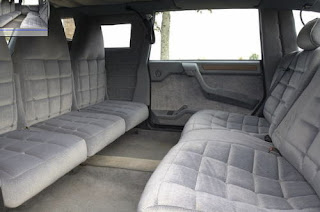
The following pictures are of Citroen Cx limousine that he had made especially for him, but never got to use as the Communist Government imploded and collapsed, coincidental with the opening of the Berlin Wall/Border.
There were a few Citroen Cx's in use by Top Government officials in East Germany, so it's likely Honecker had already tasted their comfort a time or two.
The Volvo Limo was the most popular choice of the top brass in the Gdr.
Honecker also had a luxury Yacht that was sixty one metres long, had electronic bugging devices, bullet proof glass and was built to withstand poison gas attacks!


While the ordinary citizens of East Germany had to make do with and wait 12-14 years for Trabants, he had a fleet of luxury cars at his disposal.
These included a customised for hunting, Range Rover, a Zil Limousine and several Volvo Limo's.
The following pictures are of Citroen Cx limousine that he had made especially for him, but never got to use as the Communist Government imploded and collapsed, coincidental with the opening of the Berlin Wall/Border.
There were a few Citroen Cx's in use by Top Government officials in East Germany, so it's likely Honecker had already tasted their comfort a time or two.
The Volvo Limo was the most popular choice of the top brass in the Gdr.
Honecker also had a luxury Yacht that was sixty one metres long, had electronic bugging devices, bullet proof glass and was built to withstand poison gas attacks!


The Pre-WWII Rear wheel drive Dkw's. 4=8, Schwebeklasse and Sonderklasse cars. 1929-1937.
Although they pioneered Front wheel drive, they also made conventional
rear wheel drive cars too, called Schwebeklasse (floating class) and
Sonderklasse (special class). These cars were two stroke, four cylinder
mostly of 1000cc, but also some of 1100cc and 800cc.
The rear wheel drive cars date from 1929, when they were first shown at the Berlin
Motor show. They were marketed by Dkw as 4=8, meaning their 4 cylinder cars
were equal in power and smoothness to the 8 cylinder cars of the era, made by others.
Their reasoning in stating this was the fact that the 2 stroke engine produces a power
stroke with each revolution, whereas the 4 stroke engine produces its power stroke
only on every second revolution.
These cars were larger and more expensive than the smaller F1 range that would
for a time be produced and sold simulataneously.
Whereas the smaller, front wheel drive cars were aimed as 'people's cars' and for the
cheaper end of the market, these rear wheel drive cars were aimed at the middle class
purchasers.
All the rear wheel drive cars would have 4 cylinder (V4) engines that used 2 extra
cylinders for forced induction, so they looked like V6's but the extra 2 cylinders
had no spark plugs.
The first 4=8 or Schwebeklasse had a 1000cc engine and developed 25 Hp.
It had a 3 speed gearbox that was mounted on the floor, necessary to drive the rear
wheels. Like all Dkw's up to this point, it had a plywood body that was upholstered in
imitation leather, with a wooden ladder type chassis.
The front and rear suspension consisted of solid axles and both utilised leaf springs.
The only model availaible initially was a 2 door sedan.
Early customers complained that this car was thirstier in its fuel consumption, compared
to its predecessor(P8), so they made an 800cc version for a while, but this was shortlived
due to the car being very underpowered and the engine's tendency to overheat and perform
poorly in cold weather.
The fuel consumption wasn't any better either, so this 800cc model was only available from
1930-1931. This engine only produced 20Hp, making it 20% less powerful than the 1000cc
model.
1931 also saw the range increased and was now available in sedan, limousine, and a
convertible, all with 2 doors.
1932 saw the same car launched but with a slightly longer wheelbase and longer body.
This car was called the DKW 432 special class. This car was given a 4 speed gearbox.
Another spin-off development of this car appeared in October 1932, called the
1001 DKW special class with a slightly more powerful engine and a floating rear axle
suspension. The body was very streamlined and attractive but the car had problems.
The solid wooden chassis struts that went from the front axle to the back one, had a
tendency to break in the middle due to the extra length they needed to be on this car,
compared to the shorter predecessors.
1934 saw the launch of the Schwebeklasse and this was a big improvement.
This car now had 2 floating axles, hence the name 'Floating class'.
An uprated engine and a second carburettor saw power rise to 30 Hp from January
1935.
July of the same year saw a new engine installed of 1100cc (1054cc) which further
boosted power to 32 Hp.
This car was available until 1937 as either a 2 door Sedan or convertible.
1937 saw the biggest improvement to date and the latest offering was called
the 'Sonderklasse' and had a longer wheelbase and a new all- steel body taken
from the 'Wanderer W24' which of course was also in the Auto-Union stable.
Although mechanically virtually the same as the last model, the problems with
the wooden chassis, namely sagging ends and also breaking bodies were addressed
and eradicated.
There were approximately 24000 rear wheel drive Dkw's made, of which around 8000
of these were steel bodied cars.
rear wheel drive cars too, called Schwebeklasse (floating class) and
Sonderklasse (special class). These cars were two stroke, four cylinder
mostly of 1000cc, but also some of 1100cc and 800cc.
 |
| 1929 model |
The rear wheel drive cars date from 1929, when they were first shown at the Berlin
Motor show. They were marketed by Dkw as 4=8, meaning their 4 cylinder cars
were equal in power and smoothness to the 8 cylinder cars of the era, made by others.
Their reasoning in stating this was the fact that the 2 stroke engine produces a power
stroke with each revolution, whereas the 4 stroke engine produces its power stroke
only on every second revolution.
These cars were larger and more expensive than the smaller F1 range that would
for a time be produced and sold simulataneously.
Whereas the smaller, front wheel drive cars were aimed as 'people's cars' and for the
cheaper end of the market, these rear wheel drive cars were aimed at the middle class
purchasers.
All the rear wheel drive cars would have 4 cylinder (V4) engines that used 2 extra
cylinders for forced induction, so they looked like V6's but the extra 2 cylinders
had no spark plugs.
 |
| One of the last rear wheel drive's made by Dkw. Schwebeklasse from 1936 or 1937. Steel bodied car. |
The first 4=8 or Schwebeklasse had a 1000cc engine and developed 25 Hp.
It had a 3 speed gearbox that was mounted on the floor, necessary to drive the rear
wheels. Like all Dkw's up to this point, it had a plywood body that was upholstered in
imitation leather, with a wooden ladder type chassis.
The front and rear suspension consisted of solid axles and both utilised leaf springs.
The only model availaible initially was a 2 door sedan.
Early customers complained that this car was thirstier in its fuel consumption, compared
to its predecessor(P8), so they made an 800cc version for a while, but this was shortlived
due to the car being very underpowered and the engine's tendency to overheat and perform
poorly in cold weather.
The fuel consumption wasn't any better either, so this 800cc model was only available from
1930-1931. This engine only produced 20Hp, making it 20% less powerful than the 1000cc
model.
1931 also saw the range increased and was now available in sedan, limousine, and a
convertible, all with 2 doors.
1932 saw the same car launched but with a slightly longer wheelbase and longer body.
This car was called the DKW 432 special class. This car was given a 4 speed gearbox.
Another spin-off development of this car appeared in October 1932, called the
1001 DKW special class with a slightly more powerful engine and a floating rear axle
suspension. The body was very streamlined and attractive but the car had problems.
The solid wooden chassis struts that went from the front axle to the back one, had a
tendency to break in the middle due to the extra length they needed to be on this car,
compared to the shorter predecessors.
1934 saw the launch of the Schwebeklasse and this was a big improvement.
This car now had 2 floating axles, hence the name 'Floating class'.
An uprated engine and a second carburettor saw power rise to 30 Hp from January
1935.
July of the same year saw a new engine installed of 1100cc (1054cc) which further
boosted power to 32 Hp.
This car was available until 1937 as either a 2 door Sedan or convertible.
1937 saw the biggest improvement to date and the latest offering was called
the 'Sonderklasse' and had a longer wheelbase and a new all- steel body taken
from the 'Wanderer W24' which of course was also in the Auto-Union stable.
Although mechanically virtually the same as the last model, the problems with
the wooden chassis, namely sagging ends and also breaking bodies were addressed
and eradicated.
There were approximately 24000 rear wheel drive Dkw's made, of which around 8000
of these were steel bodied cars.
Tuesday, July 19, 2011
Trabant 601 Road Test from 1966.
 |
| Statue in the grounds of the Trabant factory ruins on same site as Horch Museum. |
Road Test: Trabant 601
Extract from a 1966 edition of the West German magazine “Hobby”
(translated).
In your opinion, what is the cheapest: the Goggomobil 250 or the Fiat 500?
Neither – the Trabant 601 from Saxony is even cheaper: a proper family car
with a 600cc engine! So what’s its secret? As we’re technicians not
journalists, we are only going to study the car and what it has to offer the
buyer.
For someone buying a small car, the biggest attraction is low maintence costs
(especially when it comes to the body). With this in mind, the Trabant’s unitary
construction Duroplast body is ideal. We still don’t know if this material is as strong as glass reinforced plastic.
Nevertheless, replacement panels are certainly well priced: a front wing costs DM36.75, a rear wing DM39.75, a door
panel DM37.95, a bonnet DM72.00 and a roof panel DM98.40. (Prices from the importer in Hamburg). The body as a
whole is very stable and rigid. To test this we drove over some roads that haven’t been repaired since Roman times
(sic). Uneven surfaces were easily detectable through the stiff suspension, but nf a Renault 4. The French offering is more precise – it is immediately apparent where
each gear is to be found. In the Trabant, we had to retake our acceleration measurements several times because we
found the gearchange difficult to work. Fortunately, there is a version fitted with an automatic clutch system called
“Hycomat” that we cannot recommend enough, even though we were convinced that you could get used to the manual
gearchange. The synchromesh on all four gears works well, while the fourth gear incorporates a free-wheel system that
cannot be switched off.
According to the manufacturer’s data, the Trabant can accelerate from 0 to 80km/h in 20.7 seconds. With a brand new
car and difficulties with the gear change, the best we could measure was 3 seconds over this time, but we would like to
belive that Zwickau’s figures are as accurate as their speedometer. We achieved an acceleration from 0 to 60km/h in
12.9 se conds using only the first three gears – you don’t need to change up to second until 45km/h and similarly third
isn’t needed until 70km/h. We did not wish to risk overloading the new engine, and in addition the test car was for
publicity and not a factory model.
Roadholding and tyres
 |
| the 1,000,000th Trabant in 1973 |
rear end slid out on a paved roundabout – and that was only at a speed of 40km/h! We initially thought that the tyres
were causing the problem; the factory-fitted rubber could not even pretend to be up to modern standards. In addition,
the weight distribution over the axles is designed for a fully loaded car: 450kg on the front axle and 550kg on the rear.
With only two passengers in the front the handling is very different.
Fortunately, the rack and pinion steering is quite direct (but on the other hand quite heavy), allowing any “wandering” to
be quickly corrected. The turning circle (9.5m) is particularly good for a front-wheel drive car.
The suspension is hard. The transverse front leaf springs transmit every bump and rumble into the cabin, especially
 |
| my own 1989 601 Kombi |
(like on the new Wartburg from Eisenach). The floating rear axle was perfect for the heavy AU 100, but for the Trabant it
is too firm.
Our verdict on the Trabant
Someone who buys a car in this price category does so for a reason, usually for economy. You need a robust car that
you can maintain and, if needs arise, repair by yourself. The Trabant certainly meets these requirements! We’ve
researched the prices of spare parts and can conclude that they are as well priced as the car itself. There is nothing
complicated about this car, and it is with this that we can see a big opportunity for the Trabant which, naturally, is not
supported by a wide-reaching dealer network. It is a family vehicle in which you head off on holiday in without sacrificing
on camping gear. The loading capacity of 385kg does not slow the car down, in fact it improves handling. The governed
two stroke engine is economical, with a fuel consumption of 7 to 9 liters/100km, reflecting the economy of the rest of the
car. The final case for the Trabant is its pleasant profile that departs from the typical small-car look. The engine and
chassis may not be the most up-to-date, but for this amount of money, you can’t have it all.
 |
| Forlorn Trabant factory Feb 2011 |
Tuesday, July 12, 2011
A highly unusual two stroke car
I noticed for sale a few weeks ago a 'Goliath 700' car on Ebay that needed total restoration.
It was a 1954 model and if I wasn't financially strapped at the minute, I would have bought it.
The car only made £670 and although it needed total restoration, it looked like a good base.
Biggest problem I had was I would've had to have had it transported which would have added £400 onto the price as the car was in England.
I wouldn't think there's great availability of parts around nowadays for these, particularly without a knowledge of German as undoubtedly that where the lion's share of the parts will be.
I'm sure a Wartburg or Trabant engine could be made to fit into one of these to the detriment of originality.
For those who don't know what a Goliath is, read on:
Goliath was a German car marque that originated in 1928 in the city of Bremen.
Its founder's were Carl Borgward and Wilhelm Tecklenburg and Goliath was a subsidiary of the Borgward group.
The company made small 3 & 4 wheeler cars and light commercial vehicles and used two stroke engines up until 1957.
The Goliath was the first mass produced car to use fuel injection ( Bosch) and the only two stroke car ever to use it which makes these cars pretty unique in the world of two stroke cars.
In 1931 Borgward acquired the Hansa company and made cars under the names of Goliath, Borgward, Hansa and also Lloyd.
The first Goliath car was the pionier launched in 1931.It was a 3 wheeler with a one cylinder engine.
The Goliath GP 700 first appeared in 1950 and was made until 1957.
As the name suggests it had a 700cc engine which was a two stroke, twin cylinder unit.
It was water-cooled and mounted transversely with front wheel drive.( very dkw like).
From 1952, Bosch fuel injection was fitted as standard and put out 29 Hp.
Also from 1952, this car was available with an all syncromesh four speed gearbox, which later became standard and was very much ahead of its time in 1952.
The 1950-1952 early cars were carburettor powered and produced 25 Hp.
The standard cars had a top speed of 63 mph.
There was a 900cc engine later available (Gp 900)and a Gp 700 Sport model made from 1951-53 that had its engine enlarged to 845cc and had a claimed top speed of 78 mph. Gorgeous looking car it was too.
it produced 32 Hp. The bigger engined variants were two cylinder units as well.
The Goliath factory was destroyed in WWII but production started again in 1949.
Perhaps no surprise that the car that sold on Ebay was bought by a German buyer, who had it transported back. Just shows how rare these cars are today and the effort some enthusiasts are prepared to put in to juat get their hands on one and restore it.
It was a 1954 model and if I wasn't financially strapped at the minute, I would have bought it.
The car only made £670 and although it needed total restoration, it looked like a good base.
Biggest problem I had was I would've had to have had it transported which would have added £400 onto the price as the car was in England.
I wouldn't think there's great availability of parts around nowadays for these, particularly without a knowledge of German as undoubtedly that where the lion's share of the parts will be.
I'm sure a Wartburg or Trabant engine could be made to fit into one of these to the detriment of originality.
For those who don't know what a Goliath is, read on:
Goliath was a German car marque that originated in 1928 in the city of Bremen.
Its founder's were Carl Borgward and Wilhelm Tecklenburg and Goliath was a subsidiary of the Borgward group.
The company made small 3 & 4 wheeler cars and light commercial vehicles and used two stroke engines up until 1957.
The Goliath was the first mass produced car to use fuel injection ( Bosch) and the only two stroke car ever to use it which makes these cars pretty unique in the world of two stroke cars.
In 1931 Borgward acquired the Hansa company and made cars under the names of Goliath, Borgward, Hansa and also Lloyd.
The first Goliath car was the pionier launched in 1931.It was a 3 wheeler with a one cylinder engine.
The Goliath GP 700 first appeared in 1950 and was made until 1957.
As the name suggests it had a 700cc engine which was a two stroke, twin cylinder unit.
It was water-cooled and mounted transversely with front wheel drive.( very dkw like).
 |
| a pristine example of the Goliath Gp 700 |
From 1952, Bosch fuel injection was fitted as standard and put out 29 Hp.
Also from 1952, this car was available with an all syncromesh four speed gearbox, which later became standard and was very much ahead of its time in 1952.
The 1950-1952 early cars were carburettor powered and produced 25 Hp.
The standard cars had a top speed of 63 mph.
There was a 900cc engine later available (Gp 900)and a Gp 700 Sport model made from 1951-53 that had its engine enlarged to 845cc and had a claimed top speed of 78 mph. Gorgeous looking car it was too.
it produced 32 Hp. The bigger engined variants were two cylinder units as well.
 |
| rare Gp 700 Sport.Note the peugeot like lion symbol on front grille. |
The Goliath factory was destroyed in WWII but production started again in 1949.
Perhaps no surprise that the car that sold on Ebay was bought by a German buyer, who had it transported back. Just shows how rare these cars are today and the effort some enthusiasts are prepared to put in to juat get their hands on one and restore it.
Monday, July 11, 2011
Trim Classic Car show next Sunday, 17th July.
Next Sunday is the Trim, Co.Meath annual car show and I will attend that with the 311.
Hopefully the weather will be good for the day and it usually attracts in excess of 600 cars.
This will be the 3rd year in a row that I've brought a Wartburg to it.
In 2009, I brought my 353 saloon. 2010, I brought the 353 Tourist estate.
Hopefully the weather will be good for the day and it usually attracts in excess of 600 cars.
This will be the 3rd year in a row that I've brought a Wartburg to it.
 |
| 2009 |
 |
| 2010 |
 |
| 2011 |
Monday, July 4, 2011
Suzuki's Two stroke Car, the Suzulight from 1955!
 |
| 1955 Suzuki Suzulight |
Suzuki were one of the first Japanese companies to go into car production.
The Suzulight SF was first introduced in 1955 and the SF stood for " Suzuki 4 wheel car".
The Suzulight was the name used to begin with, the Suzuki branded cars followed later,
although their Motorcycles were branded as Suzuki's at this time.
The Suzulight was their product to fit into the kei class of small vehicles that had to
conform to strict size and engine restrictions in order to qualify for tax and parking
concessions in Japan.( See also Subaru 360 for more info)
The Suzulight was available when launched as a car, van or pickup.
They were all based closely on the German Marque, Lloyd LP400, which in turn was
a copy of Dkw's front wheel drive, transverse engine layout,
with the fuel tank under the bonnet. The only real difference between the Lloyd and
Suzulight was that the Japanese car used a narrower bore to make the engine that bit
smaller to fit into the 360cc limit in Japan for Kei cars.
 |
| 1964 Suzuki Carry Van |
Unlike the Dkw, however the Lloyd and Suzulight used air cooling and the layout was
very similar to the Trabant P50 that appeared in 1958.
Apparently, Suzuki had studied the Citroen 2CV and the Renault 4CV with a view to
importing them instead, but decided to go with the Lloyd car as their choice.
Whether this was solely down to price, I don't know.
Lloyd cars had a good reputation for comfort, reliability and solid mechanics.
The engine was 360cc, two cylinders and of course, two stroke.
It had a power output of 16 Hp at around 3800 rpm.
It was perfect for the kei cars that were becoming
extremely popular in Japan.
The car had drum brakes all round.
It was 2990 mm long, 1295 wide and 1400mm high.
It's wheelbase was 2000mm.
Sizewise it was very similar to the Mini, with the Mini being slightly longer and
wider, but the Suzulight was slighly taller and with a bigger wheelbase.
While the Mini used 10 inch wheels, the Suzulight's were 12 inches.
The car had an excellent suspension set up with independent suspension front
and rear, that utilised double wishbones and coil springs which was very advanced
for this time and particularly so in a small economy car.
It's simple chassis consisted of a central tube with the front and rear suspension mounted
on at each end.
Equally progressive was its rack and pinion steering which few cars had in 1955.
It should be remembered that all of these progressive features were Lloyd attributes,
not Suzuki's.
The gear box was a 3 speed, column mounted change.
The engine bore was increased slightly in 1956, which made the engine just over 1cc
bigger and increased power to 18 Hp.
The Suzulight was clearly a car made to a low price and it had few creature comforts.
Early models had semaphore type indicators and lacked a fuel gauge.
Fuel levels were determined( like the Trabant) by sticking a measuring stick into the
fuel tank.
It was found that the advanced suspension of the car was unable to cope with the very
poor road conditions that were prevalent in rural Japan. Some of the roads were little
more than dirt tracks with huge potholes, so the suspension was changed in favour of a
more traditional one incorporating leaf springs on both front and rear.
By 1958, slow sales prompted the company to offer just one model in their range,
this became the SL light van that had 2 front seats, plus an auxiliary seat.
The loading capacity of this little van was just 200 kg.
Only available in two tone paint colours the range was extremely eye catching.
It was also the first Kei class light commercial to have a bonnet due to the competition
mostly being rear engined.
There were only between 30-50 of these built before the model was replaced in
July 1959 with the Suzulight TL Light Van.
Suzuki made two stroke cars and vans up until 1969.
Tuesday, June 28, 2011
Dkw's in Ireland
Interestingly, the only Dkw factory outside of Germany( in 1952) was in Ireland, on what's
now the site of Aldi supermarket in Ballincollig, County Cork.
In 1952, Hennessy's Ltd, Motor Engineers and Importers were given the franchise to
Import, assemble and sell new Dkw's that came to them in kit form.
This company had previously imported Studebaker cars and Oliver brand tractors
from the Usa.
Hennessy's built and sold the full range of Dkw products, cars, motorcycles and
vans and combine harvesters. Their output was usually one car per week and the cars
were sold through their showrooms in Cork City, along with full parts and service
facilities.
Irish production ceased when Volkswagen took over Auto Union in 1964.
Apparently, the Dkw sign was still visible on the assembly premises in
Ballincollig up until 2001, close to 60 years since the last car was built there.
Good Dkw's these days command high prices. Pristine examples of 50's and 60's
models regularly top £10000. At the time of writing there's a fully restored F4 (1936)
listed with an asking price of £17000 and a fabulously restored F8 Cabriolet in Germany
that has a huge price tag of 42.500 Euros! (1939 model)
Even restoration projects command very high prices and four figure sums in many
cases.
Dkw's are great examples of two stroke cars and if your budget is high, they make
an excellent choice.
However, if your budget is rather more modest, buy a Wartburg or a Trabant.
The technology is the very same, there's loads more available and they can be
bought very cheaply (still).
now the site of Aldi supermarket in Ballincollig, County Cork.
In 1952, Hennessy's Ltd, Motor Engineers and Importers were given the franchise to
Import, assemble and sell new Dkw's that came to them in kit form.
This company had previously imported Studebaker cars and Oliver brand tractors
from the Usa.
Hennessy's built and sold the full range of Dkw products, cars, motorcycles and
vans and combine harvesters. Their output was usually one car per week and the cars
were sold through their showrooms in Cork City, along with full parts and service
facilities.
Irish production ceased when Volkswagen took over Auto Union in 1964.
Apparently, the Dkw sign was still visible on the assembly premises in
Ballincollig up until 2001, close to 60 years since the last car was built there.
 |
| pictures from the Irish Dkw plant. |
Good Dkw's these days command high prices. Pristine examples of 50's and 60's
models regularly top £10000. At the time of writing there's a fully restored F4 (1936)
listed with an asking price of £17000 and a fabulously restored F8 Cabriolet in Germany
that has a huge price tag of 42.500 Euros! (1939 model)
Even restoration projects command very high prices and four figure sums in many
cases.
Dkw's are great examples of two stroke cars and if your budget is high, they make
an excellent choice.
However, if your budget is rather more modest, buy a Wartburg or a Trabant.
The technology is the very same, there's loads more available and they can be
bought very cheaply (still).
Tuesday, June 21, 2011
The Dkw Munga 1956-1968.
 |
| 1961 Munga 6 |
The Munga was an extraordinary four wheel drive, jeep and utility type vehicle.
It was really a cross between a jeep and a car.
The word MUNGA is an acronym for the German "Mehrzweck UNiversal Geländewagen mit
Allradantrieb" which translates to multi-purpose, universal, cross country car, with all wheel
drive.
It was a favoured vehicle used by the West German Border Guards during the Cold War,
who used it to monitor their side of the Berlin Wall, whilst their East German comtemporaries
on the other side were using Trabant Kubels.( ironically both were using 2 stroke engines of
Dkw origin)
How it came about is interesting.
After WWII the West German Government initiated a competition for German marques,
Borgward, Porsche, and Dkw with the objective of producing an alternative, home grown
alternative to the Land Rovers they'd used before the War.
The Land Rover was really the only viable 4x4, apart from the American Willys Jeep, both
of which must have been hugely expensive for foreign countries to buy.
Dkw got the contract and this was the start of what would become the Munga.(wasn't named
the Munga until 1962)
The Munga was made in 3 main variants, Munga 4, 6, & 8 respectively which referred to the
number of seats each model provided.
All Munga's were identical apart from the back seat configuration which determined whether
it had individual seats or bench type variants as in the 6 and 8 versions.
 |
| 1961 Munga 6 Interior |
Production started in October 1956 and ended in December 1968, with almost 47,000 having
been produced.
It was first unveiled to the Public at the Frankfurt Motor Show in late 1957, and was
at first only available to Government Forces and Services, such as the Fire department.
It was very popular with the Bundeswehr German Army and many other forces within Nato
including the Dutch Army who bought it in large numbers.
It was available to the general public from late 1957 and was priced at 9,500 DM ( approximately
$2300 at the time, which would have made it pretty expensive). Nonetheless it was popular with
farmers and forestry workers and those whose work demanded a tough, no frills vehicle that
would go anywhere in all weathers and in any terrain.
It shared the 900cc, 3 cyl, 2 stroke engine that was used by the Dkw 3=6, although the
torque settings were arranged to suit the off-road capabilities of the Munga.
It was front wheel drive, engine in the front and had a top speed of 50mph.
It was water-cooled and had a 4 speed gear box.
They had a soft-top roof and no windows and were extremely basic vehicles.
They were also remarkably tough and resilient and stood up to all kinds of abuse and
hardships. The 2 stroke engine ensured easy starting in even the coldest of Winter climes.

The Munga sold particularly well in South Africa and parts of South America where roads
were extremely poor.
I have seen some of these on Ebay for £600-£800 requiring total restoration, whilst good ones
are fetching 4500+ euros in Germany.
Monday, June 20, 2011
Great day at Kilbroney Show
 |
| Kilbroney show 2011 with my Wartburg 311 |
4 of us went in my 311 and we covered about 180 miles in comfort and without stress or fuss.
There was a good turn out of both people and cars, but I was a bit disappointed there wasn't more cars that's of specific personal interest, like Citroen's or Dkw's, particularly.
The only other Eastern block car on display was a rather shabby Lada Riva 1200.
The Wartburg got a lot of attention and admiration. Every time the bonnet was open,men flocked around to view and discuss it.
At previous shows, the Wartburg 353 and the Trabant would get the occasional derisory comment or smart remark as to their design by some ignorant moron or two, but the 311 seems to appeal to all and the attention for it was 100% positive.
I will be attending the show in Trim next month which is always a good day out. I may attend one or two before that as well.
Friday, June 17, 2011
Heading off to Kilbroney Show tomorrow!
The car has been polished inside and out, tyre pressures checked, toolkit checked and all we need for the day loaded up for the car show we're attending tomorrow in my 311.
The show is in Kilbroney Park which is in Rostrevor, County Down and around 1000 cars are expected.
I expect my 311 to be the only one there.
Not sure how the weather will be tomorrow, but we're going anyway, unless it's lashing rain.
More to follow.
The show is in Kilbroney Park which is in Rostrevor, County Down and around 1000 cars are expected.
I expect my 311 to be the only one there.
Not sure how the weather will be tomorrow, but we're going anyway, unless it's lashing rain.
More to follow.
Sunday, June 12, 2011
The Dkw F1. The 1st mass produced Two stroke car with front wheel drive.
This is the car that put Dkw on the map as a car manufacturer and was the start of their Front
wheel drive cars that continued until 1966. It was the first mass produced, Front wheel drive
car with its engine mounted transversely.
'F' stands for Front and the F1 would be quickly followed by similar but improved versions up
to F8 and the onset of WWII in 1939.
Car makers 'Ruxton, Alvis and Cord' all made their version of a front wheel drive car in 1928
(Alvis) and 1929 (Ruxton and Cord) but they were all expensive failures.
This car was built for the harsh economic climate that existed in Germany and pretty much
worldwide in the 30's, and at the time was the cheapest car you could buy in Germany at
approximately 1750 Reichsmarks.
The car was built at the Dkw main factory in Zschopau in East Germany, except for the
bodywork which was made at their Berlin- Spandau plant.
Not surprisingly the F1 sold exceptionally well, as did all the 'F' cars that followed.
By 1939, over a quarter of a million front wheel drive Dkw's had been built, which was
impressive numbers for those times. Over 100,000 were built in 1939 alone as cars
became more increasingly more affordable.
The car was a two seater roadster and firstly powered by a 500cc( 490), two stroke engine
that gave 15 hp.
. The body of this car and all of the early 'F' range of cars was made out of plywood,
which was covered with imitation leather.
The car used a very simple wooden ladder frame chassis.
Later the engine size increased to 600cc (594) and still comprised of
2 cylinders. The first 600cc powered car put out 18 hp at 3800 rpm and it is this engine
that the Trabant would later be based upon for decades thereafter.
The F1 had a 3 speed gear box and like all Dkw's was water-cooled.
wheel drive cars that continued until 1966. It was the first mass produced, Front wheel drive
car with its engine mounted transversely.
'F' stands for Front and the F1 would be quickly followed by similar but improved versions up
to F8 and the onset of WWII in 1939.
Car makers 'Ruxton, Alvis and Cord' all made their version of a front wheel drive car in 1928
(Alvis) and 1929 (Ruxton and Cord) but they were all expensive failures.
 |
| 1931 Dkw F1 |
This car was built for the harsh economic climate that existed in Germany and pretty much
worldwide in the 30's, and at the time was the cheapest car you could buy in Germany at
approximately 1750 Reichsmarks.
The car was built at the Dkw main factory in Zschopau in East Germany, except for the
bodywork which was made at their Berlin- Spandau plant.
Not surprisingly the F1 sold exceptionally well, as did all the 'F' cars that followed.
By 1939, over a quarter of a million front wheel drive Dkw's had been built, which was
impressive numbers for those times. Over 100,000 were built in 1939 alone as cars
became more increasingly more affordable.
 |
| Dkw F1 |
The car was a two seater roadster and firstly powered by a 500cc( 490), two stroke engine
that gave 15 hp.
. The body of this car and all of the early 'F' range of cars was made out of plywood,
which was covered with imitation leather.
The car used a very simple wooden ladder frame chassis.
Later the engine size increased to 600cc (594) and still comprised of
2 cylinders. The first 600cc powered car put out 18 hp at 3800 rpm and it is this engine
that the Trabant would later be based upon for decades thereafter.
The F1 had a 3 speed gear box and like all Dkw's was water-cooled.
Why buying Wartburgs and Trabants makes sense today.
1. They were made up until around 1990, so there's still plenty available although they
are more scarce every year.
2. They're remarkably cheap as far as classic car values go. A really good Trabant that
needs no work can be had for around £1000, or 1250 euros with 12 mths test.
Wartburg 353's in the same condition are a little dearer, but £1500 or 1800 euros will get
you a really good one.
Tatty cars with mot can be had for 500/600 pounds and euros, so easy to buy.
There were approximately 3 million Trabants made and about 1 million Wartburg 353's.
Trabants are easier to sell on and currently have more of a following
but the Wartburg will fetch more money when you find
the right buyer.
They'll also appreciate more in time as they're that little bit rarer than the Trabant.
The 353 will become more sought after in time, as they become rarer.
Even older cars, 30+ years can be bought very cheaply( if more expensive) compared
to Dkw's and Saabs of the same era and they're really very similar underneath, so
these cars represent great value at the moment which will change one day.
3. Wartburgs and Trabants are the closest thing to modern day Dkw's, yet sell for a pittance
compared to Dkw's.
If you want one for regular use get a late 80's or 1990 example, they still use the original
Dkw technology albeit they may also have electronic ignition fitted,
which makes them more reliable and better suited to regular driving than the old points systems.
Their rugged simplicity added to the electronic ignition and an electric fuel pump( 353) gives
them a reliability that matches modern cars.
4. Later cars used a fuel mixing ratio of up to 50:1, petrol to 2 stroke oil.
(although personally I would prefer 40:1) and need very little maintenance.
Older cars need their lubrication points greased more regularly and require
generally more maintenance.
5. Later cars had the most advanced ( if that's the right word when discussing archaic
2 stroke engines) engines and are more fuel efficient, at least in the case of the Trabant.
The Trabants from the mid 80's had a different carburettor fitted than previous ones that
gives slightly less acceleration but more mpg.
The Trabant Kombi I had returned over 50 mpg.
The 353's I had were harder, the saloon returned an average mpg of about 35 and the
Tourist estate only about 28-30.
The 311 remarkably returns more mpg than the 353 and will return 40 mpg on a journey.
6. I believe these cars if maintained will rapidly accumulate in value over time as their
uniqueness also increases.
7. You find many Trabants and to a lesser extent, Wartburgs popping up on Ebay regularly.
Some of these cars will have been driven from Eastern Europe to the Uk and not registered.
Tread carefully, but if you do , you can often get good cars and save the expense of going to
Places like Poland, Bulgaria and Hungary yourself.
The poorer countries of Eastern Europe as afore mentioned usually are the best places
to buy as the cars will have been used as regular transport and are not viewed as classics.
Poland and Bulgaria in particular I've noticed some cracking cars at really low prices.
Germany too has many fine examples for sale but prices there have got a lot higher in
recent years and will be double what can be had elsewhere in Europe.
of course, going to these countries and driving a car back or having one shipped
incurs much expense, plus insurance etc, so has to be budgeted for and factored into
the overall expenditure.
The Wartburg/Trabant IFA club also often has cars for sale through club members, often
at good prices. I would recommend this option as a starting point if looking to buy as most
members are enthusiasts and tend to keep their cars better than non-enthusiasts.
Cars often appear through the club at very low prices.
The reverse is also true though, the club is not a good place to sell your car unless it's
cheap.
8. They're surprisingly decent transport if you get a good one that are cheap to run and
maintain. If you want a car just to take to shows, then you will pay more for an older car
in good condition but will also get free road tax and classic car insurance if old enough.
9. Their simpicity is understated and in itself makes these cars extremely robust and hard
to kill. All parts are available from Uk or certainly Germany including new pistons and new
crankcases, so even if you buy a non-runner that needs work, it's a lot more doable than
many other classic cars.
Points to watch for.
1. Most of the body panels on the Trabant are made from duroplast so do not rust.
Underneath these panels though is steel underpinnings, basically a steel body shell
which of course can and does rust. Along the bulkhead/firewall in Trabants, particularly
under the battery tray are common rust traps.
The door sills often also rust badly.
The floor can also rust badly and moisture often seems to gather and sit in the front
footwells in some cars.
Remember, anywhere underneath those duroplast panels can rust. If you notice
rust anywhere where the duroplast and steel meet, you can be sure there's more under
the surface. That said, Trabants and Wartburgs are pretty good compared to most other
cars of the same vintage as regards their tendency to rust.
2. The Wartburg has a separate box frame chassis, is not a monocoque like the Trabant so
the chassis can be replaced if necessary. However, this rarely is necessary as rustproofing
was carried out in the factory when made and they're remarkably sturdy and solid by nature
anyway. The front wings on the 353 are prone to rusting, but skins can be got from Germany.
Of course, the Wartburg is a steel car, no duroplast excepting the rear tailgate on some
Tourist models so it can rust anywhere. The above mentioned are the most common I've noticed.
The steel used in the Wartburgs is a much heavier quality generally than that used in the
Trabant and resists rust better. Remember these are generalisations, cars differ!
Wednesday, June 8, 2011
FSO SYRENA, TWO STROKE CAR FROM POLAND 1957-1983
 |
| Syrena 100, 1957 |
The Syrena made its introduction to the motoring world in 1955, when it first debuted at the
Poznan Trade Fair in prototype form.
It's inception began in 1953, when the Polish Government instructed it's factory for
small cars( FSO) to begin work designing prototypes for an affordable people's car.
Fso's intention was to make the Syrena with a monocoque body and to use a four
stroke engine. To combat steel shortages and to cut costs it was envisaged that the
car would use a wooden body that was to be covered with a leather type material, similar
to the pre-War Dkw's.
By December 1953, they had assembled two working prototypes.
The engineer who was given the task of designing an engine for the car was Fryderyk Bluemke.
The 1st prototype was the work of Stanislaw Pankiewicz, who made his car with a wooden
body. The second Prototype was made by Stanislaw Lukaszewicz, with an all steel body.
Both prototypes must have been credible as the factory combined elements of both and made
a car that used the design of Pankiewicz's car and the steel body of Lukaszewicz's, except
for the roof which was to be made of wood.
By March 1955, Fso had 5 working prototypes of the Syrena and used them in an
experimental rally in September to test the car's strengths and weaknesses.
They covered a distance of 5600 km and the fallibility of the wooden roof proved a decisive
lesson that resulted in the death of one of the drivers, Karl Pionnier when he crashed his car.
The Engineers wisely decided after this, to construct the car entirely of steel.
When the Polish Government saw an enthusiastic reception for the car from the public at
the 1955 Poznan Trade Fair, they decided to put that prototype into production.
This was the Syrena 100.
 |
| 1955 prototype |
As Poland was Communist, the engineers at Fso had many restraints placed upon them,
mainly financial and otherwise, as to what they could and couldn't do.
Like Wartburg and Sachsenring, if what they wanted to do cost money to develop, it was
usually quickly rejected. It's no surprise therefore to learn that the two stroke engine that
appeared in the Syrena 100 and all subsequent models, would be based on the existing
Pre-War Dkw technology that was already freely available to them, through their 'Socialist
brothers' in East Germany.
The Syrena, although developed independently, was very similar to the Zwickau P70 and the
Trabant P50 , that was developed at approximately the same time.
To cut costs yet further, the Syrena would use some parts and much switchgear from their
larger, existing 'Warszawa' four stroke car.
 |
| Syrena 102, 1962 |
The name 'Syrena' means mermaid in Polish and is synonymous with Polish mythology
and folklore as there was a mermaid who guarded the Wisla river in Warsaw.
A mermaid also features in the city's coat of arms.
 |
| Syrena Bosto minibus 1960 |
It was available to buy from 1957 and was manufactured until 1983, giving it a lengthy
production run of over 25 years with only minor changes.
The models ran from the 100,101,102,103,104 and 105, with light commercial van and minibus options, known as the Bosto.
The twin cylinder two stroke was later updated with a similar engine and that was eventually replaced with a 3 cylinder, 2 stroke unit of 842cc, which was based on the Wartburg 1000 engine.
The Wartburg 1000 engine was also available as an option on certain, top of the range 102 and 103 models, which was the most powerful variant ever fitted to the Syrena.
 |
| Syrena 104 1968 |

Wednesday, June 1, 2011
The Dkw Schnellaster Van 1949-1962
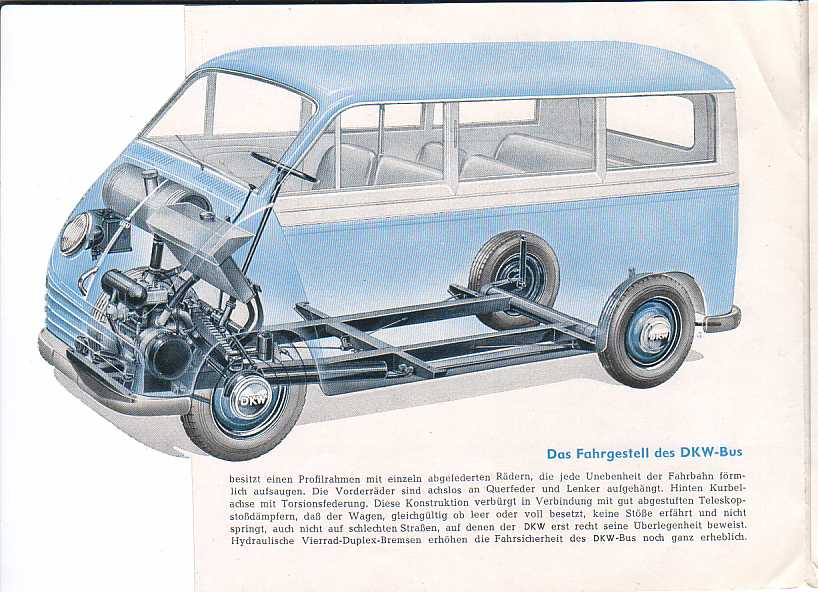
This pioneering vehicle was probably the very first mini-bus and people carrier of its kind.
 Available in a wide range of body styles, there were 9 seater buses, vans, pick-ups and
crew type vans. There were also many customised versions too, camper vans, fast
food wagons and Public Service vehicles etc.
Created in 1949, after Dkw left Zwickau for West Germany, these commercials were of
paramount importance in rebuilding Dkw's reputation and also their finances which took a
hammering during the War and forced the company to leave their factories in Soviet hands
with no reparation. It was this innovative and hugely practical vehicle combined with
Motorcycle and car sales that ensured the company prospered once again and ensured
their future in the very lean post-war years in Germany.

The Renault Espace advertised their vehicle was the first people carrier,
from 1984 which it certainly wasn't as there were always a legion of Van based buses
made by many manufacturers from at least the 1950's onwards.
Renault championed this Front wheel drive box, with its transversely mounted
engine, cube like body, a flat floor and versatile and flexible seating.
Although, they can hardly be compared as similar, the Schnellaster had all these
characteristics from 1949 and managed to do everything with a tiny two stroke
engine. The early ones had a twin cylinder, engine of just 700cc( this was copied
by the IFA for their F8 and would appear in modified form for the Zwickau P70 in
1958).
The Schnellaster shared it's engine, gear box and chassis to the F89 and thus the
F8.
The Engineers at Dkw must have had a sense of humour.
The word Schnellaster, when broken down into two words Schnell and Laster
translates as 'Fast Truck', of which it certainly was not.
It could also be a reference meaning ' Fast delivery' .

The 700cc engine put out just 20 Hp, which was good for just 70 kmh( 43 mph), but
as small freight vehicles mainly, they were set up to produce torque and pulling power.
Speed wasn't important, so their naming of the truck must have been 'tongue in cheek'
or it was named so to appear desirable and sexy.
The output was increased in 1952 to 22 hp and increased further to 32 Hp in 1955 when
it received the 3 cylinder, 900cc engine from the Dkw 3=6 car.
They were made up until 1962.
The load carrying capacity for these remarkable little vans was 3/4 of a Ton, which
is excellent considering the size of their engines and that some small vans of
today have powerful diesel engines and they carry less.
The van derivative had access to the cargo area via a large back door, it had no side
doors. What set the Schnellaster apart from its rivals was it's unparalelled cargo area
for a small van. The van had 5 feet, 8 inches of standing height from floor to ceiling
and an overall cargo space equal to many larger vans.
The engine and transmission of the Schnellaster sat well forward of the front wheels
so it didn't cut into the passenger compartment and space was thus maximised.
I'm pretty certain that this van was the first mass produced, front wheel drive product
of its kind. When you consider most vans were still rear wheel drive in the 1990's this
was extremely ahead of its time.
It also had a clever and effective suspension set up that used rear trailing arms that
had springs built into the cross bar assembly. This was extremely advanced for a vehicle
of this kind when most cars didn't even have it.
They were like all Dkw's, Water-cooled.
These vans had wooden floors.
In addition being made in Germany, they were also made in Ireland and Spain from
1952 and 1954 respectively.
As with the Trabant and some others including Lloyd car's, the Schnellaster's fuel
tank was under the bonnet, next to the bulkhead.

Dkw's biggest rival in this market would turn out to be VW, who launched their 'Bulli'
Transporter, based on the Beetle in 1950.
The first versions had an 1100 c engine and produced 24 hp, so comparable in this
respect to the output of the Schnellaster.
The VW outsold the Dkw, but they were both a huge success.
In fairness to Dkw, they wouldn't have had the production capabilities at this time that
Vw did, so couldn't really compete if the demand was there anyway.
Also, the Vw was available in many more body type options and had a large contract to
provide Emergency Services vehicles for respective Police, Army, Ambulance and Fire
Brigade.
By comparision, the Vw was rear engined and rear wheel driven, with a 4-stroke engine,
and aircooled. The complete opposite to Dkw.
As far as space goes, the Schnellaster won hands down as the rear engine of the Vw
eliminated any chance of a completely usuable flat floor cargo area.
Furthermore, the Schnellaster cargo area had a standing height of 5 feet 8 inches, and
a low loading height which made it unbeatable as far as space was concerned for its size.
There's very, very few of these vans left nowadays anywhere and when they are
available they're usually sold within DKW circles, through clubs etc.
There's currently only one that's on the road, in all of the Uk and Ireland.
It's a 1958, 9 seater minibus, owned by Bill Ryan from Cork in Ireland.
It's been restored to a fantastic condition and the owner told me it was formerly
owned by the Rasmussen family, who created Dkw.
I did see one for sale on American Ebay a couple of months ago, a 1958 Van that
had been previously used as part of a tv repair business in the States for 12 years and
had been lying up since 1970. It needed extensive restoration, although it was a good
base for such. However, the engine wasn't turning freely.
It made $9,300 ( £5700 sterling approx), so you can only guess what a
cracking example would cost if one became available.
There must be a few of these vans lying in fields or barns around the place, probably
rusted through and mostly unrestorable. There may even be a few not far from me
in Ireland lying in perpetual slumber.
What a pity!

crew type vans. There were also many customised versions too, camper vans, fast
food wagons and Public Service vehicles etc.
Created in 1949, after Dkw left Zwickau for West Germany, these commercials were of
paramount importance in rebuilding Dkw's reputation and also their finances which took a
hammering during the War and forced the company to leave their factories in Soviet hands
with no reparation. It was this innovative and hugely practical vehicle combined with
Motorcycle and car sales that ensured the company prospered once again and ensured
their future in the very lean post-war years in Germany.

The Renault Espace advertised their vehicle was the first people carrier,
from 1984 which it certainly wasn't as there were always a legion of Van based buses
made by many manufacturers from at least the 1950's onwards.
Renault championed this Front wheel drive box, with its transversely mounted
engine, cube like body, a flat floor and versatile and flexible seating.
Although, they can hardly be compared as similar, the Schnellaster had all these
characteristics from 1949 and managed to do everything with a tiny two stroke
engine. The early ones had a twin cylinder, engine of just 700cc( this was copied
by the IFA for their F8 and would appear in modified form for the Zwickau P70 in
1958).
The Schnellaster shared it's engine, gear box and chassis to the F89 and thus the
F8.
The Engineers at Dkw must have had a sense of humour.
The word Schnellaster, when broken down into two words Schnell and Laster
translates as 'Fast Truck', of which it certainly was not.
It could also be a reference meaning ' Fast delivery' .

The 700cc engine put out just 20 Hp, which was good for just 70 kmh( 43 mph), but
as small freight vehicles mainly, they were set up to produce torque and pulling power.
Speed wasn't important, so their naming of the truck must have been 'tongue in cheek'
or it was named so to appear desirable and sexy.
The output was increased in 1952 to 22 hp and increased further to 32 Hp in 1955 when
it received the 3 cylinder, 900cc engine from the Dkw 3=6 car.
They were made up until 1962.
The load carrying capacity for these remarkable little vans was 3/4 of a Ton, which
is excellent considering the size of their engines and that some small vans of
today have powerful diesel engines and they carry less.
The van derivative had access to the cargo area via a large back door, it had no side
doors. What set the Schnellaster apart from its rivals was it's unparalelled cargo area
for a small van. The van had 5 feet, 8 inches of standing height from floor to ceiling
and an overall cargo space equal to many larger vans.
The engine and transmission of the Schnellaster sat well forward of the front wheels
so it didn't cut into the passenger compartment and space was thus maximised.
I'm pretty certain that this van was the first mass produced, front wheel drive product
of its kind. When you consider most vans were still rear wheel drive in the 1990's this
was extremely ahead of its time.
It also had a clever and effective suspension set up that used rear trailing arms that
had springs built into the cross bar assembly. This was extremely advanced for a vehicle
of this kind when most cars didn't even have it.
They were like all Dkw's, Water-cooled.
These vans had wooden floors.
In addition being made in Germany, they were also made in Ireland and Spain from
1952 and 1954 respectively.
As with the Trabant and some others including Lloyd car's, the Schnellaster's fuel
tank was under the bonnet, next to the bulkhead.
Dkw's biggest rival in this market would turn out to be VW, who launched their 'Bulli'
Transporter, based on the Beetle in 1950.
The first versions had an 1100 c engine and produced 24 hp, so comparable in this
respect to the output of the Schnellaster.
The VW outsold the Dkw, but they were both a huge success.
In fairness to Dkw, they wouldn't have had the production capabilities at this time that
Vw did, so couldn't really compete if the demand was there anyway.
Also, the Vw was available in many more body type options and had a large contract to
provide Emergency Services vehicles for respective Police, Army, Ambulance and Fire
Brigade.
By comparision, the Vw was rear engined and rear wheel driven, with a 4-stroke engine,
and aircooled. The complete opposite to Dkw.
As far as space goes, the Schnellaster won hands down as the rear engine of the Vw
eliminated any chance of a completely usuable flat floor cargo area.
Furthermore, the Schnellaster cargo area had a standing height of 5 feet 8 inches, and
a low loading height which made it unbeatable as far as space was concerned for its size.
There's very, very few of these vans left nowadays anywhere and when they are
available they're usually sold within DKW circles, through clubs etc.
There's currently only one that's on the road, in all of the Uk and Ireland.
It's a 1958, 9 seater minibus, owned by Bill Ryan from Cork in Ireland.
It's been restored to a fantastic condition and the owner told me it was formerly
owned by the Rasmussen family, who created Dkw.
I did see one for sale on American Ebay a couple of months ago, a 1958 Van that
had been previously used as part of a tv repair business in the States for 12 years and
had been lying up since 1970. It needed extensive restoration, although it was a good
base for such. However, the engine wasn't turning freely.
It made $9,300 ( £5700 sterling approx), so you can only guess what a
cracking example would cost if one became available.
There must be a few of these vans lying in fields or barns around the place, probably
rusted through and mostly unrestorable. There may even be a few not far from me
in Ireland lying in perpetual slumber.
What a pity!
Forget about buying one of these and buy a Barkas instead while you still can.
Thursday, May 26, 2011
The first Two Stroke Saab. The Ursaab/Saab 92
 |
| From the Saab Museum in Trollhatten, Sweden. Amazingly this prototype is still in working order today |
Aircraft Company, Saab, realised as World War II came to a close, the market for Military
Aircraft which had been their bread and butter for so long, was also ending.
They had been manufacturing Aircraft since 1937, when the company was set up for
specifically that purpose by the Goverment.
Their first Planes were copies of German models that they built under license.
Shortly after this, they began to make their own aircraft and quickly obtained a
reputation for making high quality, fast planes.
They knew that in order to survive financially, they had to diversify into other things.
They considered many things including, Fitted Kitchens, Motorcycles, Cars, Vans and
Trucks.
Most of these fields already had established manufacturers in Sweden already, lIke
Scania for Trucks and Volvo for Cars.
Saab realised though that Volvo cars were quite pricey and what Sweden needed was a
small, affordable and reliable car for families and people of average means.
So, Saab sought to develop such a car and fill a niche in the marketplace.
This project was given the name 'Project 92' and twenty people were recruited to develop it.
Out of these twenty, about fifteen were Aircraft Engineers.
Stylist Sixten Sason was responsible for designing the body of the car, and
Engineer Gunnar Ljungström was the brain behind the technical aspects.
All two stroke Saabs had a freewheel fitted and all were water-cooled.
The Ursaab
A 1:10 scale model Ursaab was tested in a wind tunnel and gave a drag coefficient of 0.32,
an impressive figure even by today's standards.
Ursaab is Swedish for 'original Saab'.
The body drawings were completed by January 1946 and a full sized model was ready by
April of the same year, reputedly coated in black boot polish!
(whether there's any truth to this, I don't know.)
Although nowadays, the beautiful styling of this car is apparent to all lovers of classic
cars, at the time there was a mixed reaction to the styling and it came in for quite a bit
of criticism and trepidation on the part of Saab's own management team.
Engineer Ljungstrom said "...if it can save 100 litres of fuel a year, it doesn't matter if it looks
like a frog."
This first prototype was given the number 92/001 and was made using a steel body,
an 18hp DKW two stroke engine, an Auto-Union fuel tank and many other parts were
sourced from scrap yards.
The car was front wheel drive, with a monocoque body, which was very unusual and
advanced for it's time in the 1940's. The styling and sleek aerodynamic lines show it's
Aviation inspired pedigree.
Saab have always been considered to have been a little bit different and unconventional
from the norm of Car makers( at least until they were taken over in modern times by Gm).
The prototype was ready by the end of the Summer, 1946 and was immediately tested
night and day under the most rigorous conditons.
The testing showed ways in which the car needed to be improved.
One of the problems encountered was that the car's wheels were too close
to the bodywork and would get easily clogged up with snow in Winter.
It was decided also that the doors were too thick, heavy and impractical.
Otherwise the car stood up remarkably well to the rigours of it's testing.
One Swedish newspaper of the time, reported that Ursaab had "...defied all efforts
of its driver to destroy it." (Over 50 years later, this Car can still be seen in the
Saab Museum in Trollhatten, Sweden and is still in full working order.)
There were three of these identical prototypes used for testing and between
them clocked up over 530,000 km- equivalent to thirteen journeys around the
world to ensure thorough testing under every known driving condition.
 |
| Any colour as long as it's green, baby!. Rear shot of 1951 car. |
In 1947, their factory in Trollhatten was adapted for mass production to
build this car. They had to bust a hole in the roof to install a tall body
stamping press.
Further pre-production prototypes were tested and it wasn't until June, 1949 that
the Saab 92 was launched to the Public and Press.
Full scale production started in December of that year and 1246 cars were
made by the end of 1950.
All of these 1950 cars were painted in Green, similar to Henry Ford's mantra of
any colour as long as it's black,albeit green in this case.
An unsubstantiated rumour is that the Saab had vast stocks of this paint left
over from their manufacture of military planes and used it as a cost cutting measure,
which I believe is highly probable.
Only 17% of the Saab 92 was made from imported materials.
 |
| 1947 Saab 92 |
Saab 92 1950-52
They managed to produce around 9000 cars in the first four years of production, yet
waiting lists were large, such was the demand for the car.
The Saab 92's engine was similar to the Ursaab prototype, of DKw origin but with a
higher power output of 25hp and a displacement of 764cc, with water-cooling.
This was a two cylinder engine, very similar to the one that would later power the forerunner
to the Trabant, the Zwickau P70 and was also transversely mounted.
So typical of Dkw engines, the radiator sat behind the engine, close to the bulkhead.
It had a three speed gearbox with a column change.
It's maximum speed was 105 kmph(62.5 mph), which was excellent performance for these
times from such a small engine.
The suspension was extremely clever and I think, anyway, heavily influenced by Dkw, and
utilised torsion bars.
The boot could only be opened from inside the car, making it not very practical.
The car had a 6 volt electrical system.
It's fuel-mixing ratio, petrol to two stroke oil was 25:1.
 |
| Saab 92 De-luxe, 1951. |
The only change Saab made to the 92 in 1951, was the dashboard instruments were
changed from the American 'Stewart-Warner' type to the German Vdo brand.
It's not clear why this was change was implemented. I suspect the VDO were easier
obtained and probably more cost effective.
Saab continued to update this car and make many improvements with subsequent models, 93,95, and the Saab 96 for a time, was the last one to use Dkw two stroke power until 1967 when a v4 Ford engine was implemented and two stroke Saab production ended.
The Two stroke Saab's had remarkable success on the World Rally circuit with many, many victories and successes.
Famous Rally driver Erik Carlsson in particular had many big wins to his credit.
 |
| 1951 Saab 92 Interior. |
The 1st People's Car from Japan. Two stroke Subaru 360:
Subaru 360: 1958- 1971
With it's engine of just 360cc, you might consider this to be in the microcar class, but
this car did provide room for 4 passengers, albeit small ones and also produced
commercial versions, a flat bed truck and panel van.
Furthermore, the Subaru was an excellently engineered car.
It was the first car mass produced car to be made by the company.
It's cute styling and shape earned it the nickname 'ladybird'.
It looks a little like the Beetle and also the Fiat 500 of the time.
Whilst Dkw, the Pioneers of Two stroke technology, also made their cars front wheel drive,
Subaru followed the VW Beetle with a rear wheel drive, rear engined layout that was also
mounted transversely. Like the Beetle it was also air cooled.
The car taxation policy in Japan at the time ruled that cars with engines of less than
360cc displacement qualified for the lowest taxation bracket, called the Kei class.
The reason this low tax incentive existed was to ease the congestion in Japan's cities
that was growing at an alarming rate. The Kei class was implemented in 1955.
In addition to the engine restriction, to qualify, there were also dimension restraints to
comply with.
Cars had to be no longer than 9 feet, 10 inches.
Owers of K class vehicles were also permitted to park their cars overnight in city
streets, which was forbidden at the time to all other vehicles.
The Subaru 360 came in at just under 9 feet, 6 inches ( 2990mm) and 356cc, so
it was clearly designed to fit into this class.
It's tiny engine was pretty powerful for these times and the 2 stroke unit developed
16 Hp in its initial format. This added to a low body weight of around 1000 lbs made
the car perform remarkably well given its small engine.
Top speed was 60 mph and it was claimed by Subaru that the car was capable
of returning up to 65 mpg. ( my own feeling here is that the car was undoubtedly
economical, but not to the tune of Subaru's claims)
The decision to use a 2 stroke engine must have been an easy one, given that
two strokes pack twice as much power into the same space as four strokes, and
are also lighter, simpler and cheaper to make.
A four stroke engine of just 360cc would've been a lot slower.
The Subaru was a one piece, monocoque construction which was still unusual and
pretty forward thinking in 1958.
Early models needed their 2 stroke oil premixed with the fuel, of which the fuel cap
doubled as an oil measuring cup
Later models had the 'Subarumatic' automatic oil mixing lubrication system.
This appears to have been more successful and somewhat simpler than the ill-fated
system made by Dkw in 1961.
The 360 despite the negative press it got in the Usa, was a well engineered and competent
car that enabled the fledgling Subaru company to get a foothold in the world of car manufacturing.
It spawned a Kei class 'War' that saw rival companies such as Honda and Daihatsu build
alternatives that were spawned on the success of the 360.
What set the Subaru apart and makes it so commendable is the fact that the car was designed
exclusively in-house, from its styling to its mechanics. For a manufacturer new to car making,
it was an excellent achievement. Most car makers using two stroke engines at the time were
either getting their engines from Dkw or had copied Dkw's designs.
In the Post-War period that existed in Japan, there was little innovation and much copying.
This was due to both lack of money for development and a lack of technical expertise.
What the Japanese became famous for was for first copying or adopting technology,
then improving it over time.
To put Subaru's accomplishment in making the 360 into perspective, at the time of the
360's inception, Nissan were producing Austin A50's in Japan under license.
Isuzu and Hino were doing the same with the Hillman Minx and Renault 4CV respectively.
All of these companies would eventually thrive with designs of their own, but not until
later and after they had ' cut their teeth' in manufacturing 'old' Western designs.
1950's Japan was desperately rebuilding itself ( like Europe) after WWII.
Most people couldn't afford a new car, only a motorcycle or Scooter.
The 360 bridged that gap and enabled people in the market for a two wheeler, to buy
a proper car for the first time, such was its competitive pricing.
In this sense, the 360 was the first genuine people's car of Japan.
 |
| 1958 Subaru 360 |
With it's engine of just 360cc, you might consider this to be in the microcar class, but
this car did provide room for 4 passengers, albeit small ones and also produced
commercial versions, a flat bed truck and panel van.
Furthermore, the Subaru was an excellently engineered car.
It was the first car mass produced car to be made by the company.
It's cute styling and shape earned it the nickname 'ladybird'.
It looks a little like the Beetle and also the Fiat 500 of the time.
 |
| 360 engine |
Whilst Dkw, the Pioneers of Two stroke technology, also made their cars front wheel drive,
Subaru followed the VW Beetle with a rear wheel drive, rear engined layout that was also
mounted transversely. Like the Beetle it was also air cooled.
The car taxation policy in Japan at the time ruled that cars with engines of less than
360cc displacement qualified for the lowest taxation bracket, called the Kei class.
The reason this low tax incentive existed was to ease the congestion in Japan's cities
that was growing at an alarming rate. The Kei class was implemented in 1955.
In addition to the engine restriction, to qualify, there were also dimension restraints to
comply with.
Cars had to be no longer than 9 feet, 10 inches.
Owers of K class vehicles were also permitted to park their cars overnight in city
streets, which was forbidden at the time to all other vehicles.
 |
| Subaru Sambar Flat bed truck |
The Subaru 360 came in at just under 9 feet, 6 inches ( 2990mm) and 356cc, so
it was clearly designed to fit into this class.
It's tiny engine was pretty powerful for these times and the 2 stroke unit developed
16 Hp in its initial format. This added to a low body weight of around 1000 lbs made
the car perform remarkably well given its small engine.
Top speed was 60 mph and it was claimed by Subaru that the car was capable
of returning up to 65 mpg. ( my own feeling here is that the car was undoubtedly
economical, but not to the tune of Subaru's claims)
The decision to use a 2 stroke engine must have been an easy one, given that
two strokes pack twice as much power into the same space as four strokes, and
are also lighter, simpler and cheaper to make.
A four stroke engine of just 360cc would've been a lot slower.
The Subaru was a one piece, monocoque construction which was still unusual and
pretty forward thinking in 1958.
Early models needed their 2 stroke oil premixed with the fuel, of which the fuel cap
doubled as an oil measuring cup
Later models had the 'Subarumatic' automatic oil mixing lubrication system.
This appears to have been more successful and somewhat simpler than the ill-fated
system made by Dkw in 1961.
 |
| Subaru Sambar Minibus |
The 360 despite the negative press it got in the Usa, was a well engineered and competent
car that enabled the fledgling Subaru company to get a foothold in the world of car manufacturing.
It spawned a Kei class 'War' that saw rival companies such as Honda and Daihatsu build
alternatives that were spawned on the success of the 360.
What set the Subaru apart and makes it so commendable is the fact that the car was designed
exclusively in-house, from its styling to its mechanics. For a manufacturer new to car making,
it was an excellent achievement. Most car makers using two stroke engines at the time were
either getting their engines from Dkw or had copied Dkw's designs.
In the Post-War period that existed in Japan, there was little innovation and much copying.
This was due to both lack of money for development and a lack of technical expertise.
What the Japanese became famous for was for first copying or adopting technology,
then improving it over time.
 |
| Interior view of the Subaru 360 |
To put Subaru's accomplishment in making the 360 into perspective, at the time of the
360's inception, Nissan were producing Austin A50's in Japan under license.
Isuzu and Hino were doing the same with the Hillman Minx and Renault 4CV respectively.
All of these companies would eventually thrive with designs of their own, but not until
later and after they had ' cut their teeth' in manufacturing 'old' Western designs.
1950's Japan was desperately rebuilding itself ( like Europe) after WWII.
Most people couldn't afford a new car, only a motorcycle or Scooter.
The 360 bridged that gap and enabled people in the market for a two wheeler, to buy
a proper car for the first time, such was its competitive pricing.
In this sense, the 360 was the first genuine people's car of Japan.
 |
| 1967 Subaru 360 |
Subscribe to:
Posts (Atom)